

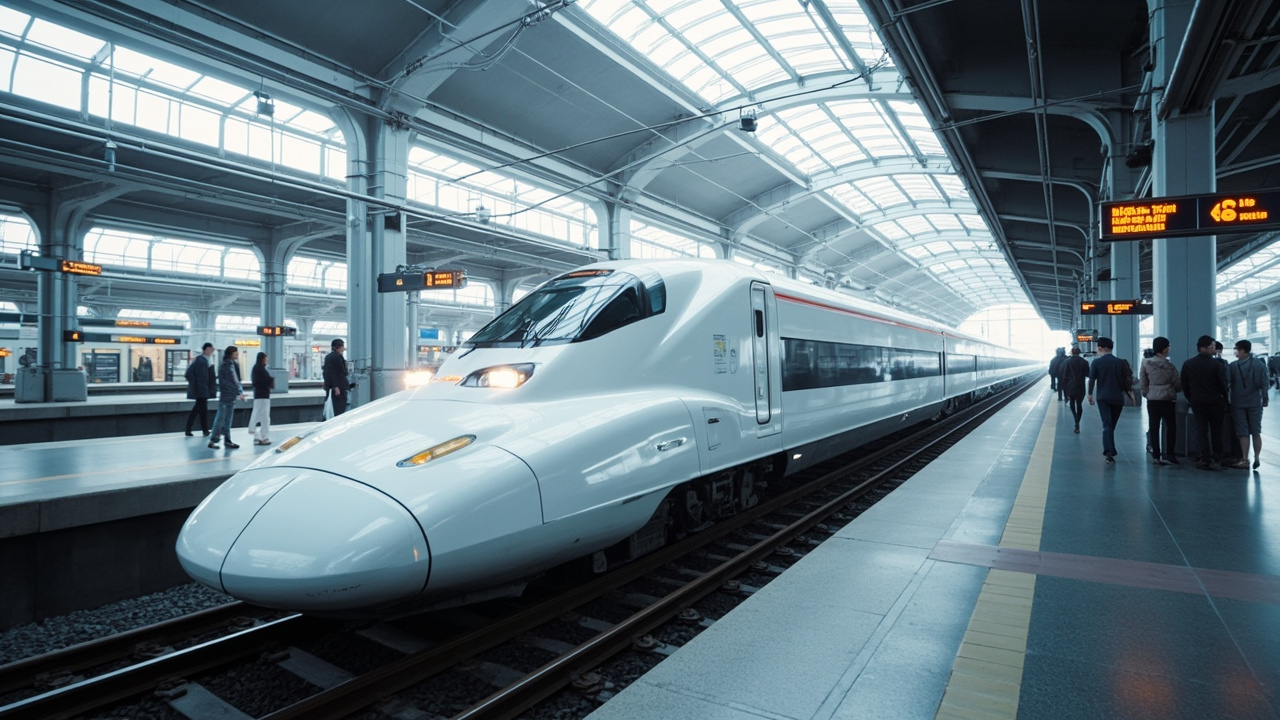
China High-Speed Rail Guide 2026: Routes, Tickets & Tips
China has the world’s largest high-speed rail network — 45,000 km connecting every major city at up to 350 km/h. Here’s everything you need to know to ride it like a local.
Why Take the Train?
China’s bullet trains beat flying for most city pairs under 1,000 km: no airport security theater, city-center stations, comfortable seats and reliable schedules. A 2.5-hour journey like Guangzhou to Guilin costs about $45-60 in second class.
Key Routes & Times
- Guangzhou ↔ Shenzhen: 30 minutes
- Guangzhou ↔ Guilin: 2.5 hours
- Hong Kong ↔ Guangzhou: 1 hour
- Shanghai ↔ Hangzhou: 1 hour
- Shanghai ↔ Suzhou: 30 minutes
- Beijing ↔ Xi’an: 4.5 hours
- Beijing ↔ Shanghai: 4.5-6 hours
- Xi’an ↔ Chengdu: 3 hours
Ticket Classes
- Second class (二等座): comfortable, 2+3 seating — the standard choice
- First class (一等座): wider seats, 2+2 — great value upgrade
- Business class (商务座): lie-flat seats on many routes
How to Book
Tickets can be booked on the official 12306 app (Chinese-language), through travel platforms, or by your tour company. Passport holders need their passport number; tickets are tied to your identity. Book 1-2 weeks ahead in peak season.
Station Tips
- Arrive 40-60 minutes early — security screening is required
- Your passport is your ticket for entry and on-board checks
- Find your gate via the big boards; trains board about 15 minutes before departure
- Food and drinks are sold on board (noodles, snacks, coffee)
Frequently Asked Questions
Do I need to print a paper ticket?
No — your passport is scanned at the gate. E-tickets are the norm.
Can foreigners book high-speed rail tickets?
Yes — with a valid passport. Your tour company can book for you to avoid language barriers.
Is high-speed rail expensive in China?
Very reasonable — typically $0.05-0.08 per km, far cheaper than comparable trips in Europe or Japan.
Can I bring luggage on the train?
Yes — there are luggage racks at the carriage ends; large suitcases are fine.
Do trains run in bad weather?
Almost always — the network is highly reliable. Typhoons occasionally suspend some routes for safety.